
Anthropology
The goal of the Anthropology Department is to prompt students to grapple with what it means to be human, through critical engagement with method and theory and the interplay between the two in original research.
About the Major
At Hamilton, anthropology is a holistic discipline. Students and faculty consider and deconstruct inference from language, behavior, material culture, and biological adaptations of humans. They trace how our questions, pursuits, and dilemmas have emerged in ways shaped by power and inequality. Through their coursework and research opportunities, Hamilton students develop the theoretical and methodological toolkits to better understand human diversity.
Students Will Learn To:
- Identify disciplinary fundamentals from multiple sub-disciplinary perspectives
- Interpret anthropological themes from a critical perspective
- Combine practice and methodology through research design
- Apply disciplinary theoretical perspective(s) in an original research project
- Create anthropological knowledge for and with multiple communities
A Sampling of Courses

Anthropology of Food
This course examines how culturally variant practices of food and eating are actively involved in (1) creating and maintaining sociality, (2) constructing and reinforcing identity, and (3) in shaping global relations of power and inequalities. Through reading ethnographies, watching films, and discussing materials in class, this course will introduce you to other ways of viewing, experiencing, and understanding food. It will also provide an opportunity to inquire how our role as consumers reinforces certain global food-ways, impacting many people who remain unseen in the process.
Explore these select courses:
Archaeology offers the opportunity to examine social-ecological systems over long time scales. This course explores different ways of conceptualizing these systems and considers major topics such as: decreasing biodiversity, traditional ecological knowledge, human-environment interactions related to food production, social responses to natural disasters and climate change, and resilience and collapse of past societies. We’ll engage with discussions on sustainability and our ecological impact on the environment.
When it comes to American schools and universities, race is everywhere. Schools are sites where many students learn what race is. This seminar examines how education is used to make the racial "other," and how educators and activists use education politically for equality and social justice. The course will also examine how contemporary educational practices continue to make and remake racial categories in the context of formal and non-formal education.
Meet Our Faculty

Chaise LaDousa
Chair, the Christian A. Johnson Excellence in Teaching Professor of Anthropology; Director of Education Studies
language and culture, particularly the ways in which institutions serve as loci for cultural production

Linguistic anthropology; cultural production, language ideologies, sociolinguistics, conversation analysis; audiovisual creativity, media, creative industries, voice acting/dubbing;Taiwan, Japan

Nathan Goodale
Professor of Anthropology, Associate Vice President for Academic Affairs
complex hunter-gatherers in the interior Pacific Northwest; the forager/farmer transition in Southwest Asia; rural coastal adaptations in western Ireland

Household archaeology, archaeology of hunter-gatherer-fishers, gender archaeology, inequality studies, agency and social identity, archaeogaming, spatial analysis

Environmental archaeology, archaeology of Southwest Asia, and anthropology of food

China, East Asia, cultural anthropology; bodies, gender, race; food, urban ethnography, consumer culture, comparative ethnography, and history of anthropology

service-learning and volunteerism; international development and education; comparative education; critical pedagogy in global context; race and education in the American South; race theory
Explore Our Spaces
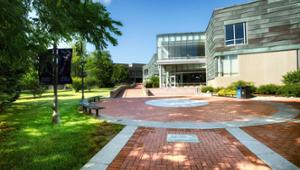
The Kirner-Johnson Building, also known as KJ, houses the offices for faculty members in anthropology. The building features an atrium, team rooms for working on group projects, and five case-method classrooms with the latest technology to support teaching and learning.


Field Work


Careers After Hamilton
Hamilton graduates who concentrated in anthropology are pursuing careers in a variety of fields, including:
- Project Geologist, GEI Consultants
- Physician, Jefferson General Medical & Pediatric Group
- Exhibition Coordinator, Philadelphia Museum of Art
- Vice President of Sales, Bayer Corp.
- History Teacher, Hingham Public Schools
- Attorney, Voices for Children
- Staff Archaeologist, Colonial Williamsburg Foundation
- Trial Preparation Assistant, New York County District Attorney’s Office
- Professor, Brandeis University
Explore Hamilton Stories

Nine Professors Join Tenured Ranks
Nine faculty members were approved for tenure by the College’s Board of Trustees at its March meeting.

Students and Faculty Travel the World for Summer Research
Hamilton faculty and students traveled the globe this summer, collaborating on research projects from the UK to Romania. See what some had to say about their research and travels.

Kudos! Recent Student Accomplishments
The fall semester started off with scores of student achievements and successes. See how Hamilton students have been keeping busy with academic, organization, and club activities.
Contact
Department Name
Anthropology Department
Contact Name
Chaise LaDousa, Chair
Clinton, NY 13323
