
Geosciences
The goal of the Geosciences Department is to ensure that students are actively engaged in developing a broad and deep background in how the Earth works, in analyzing compelling and relevant questions from a geoscience perspective, and in communicating their work effectively in order to prepare them to make better personal and professional decisions involving Earth-related issues.
About the Major
Whether a student wants to be a geoscientist or pursue another career path, Hamilton’s geoscience program gives them the foundation to better understand our geologically active planet. Students work closely and collaboratively with professors and fellow students in the lab and field to study modern active geological processes and the archive of past Earth processes in the rock record. They gain experience in collecting, analyzing, and interpreting critical data, and in communicating essential ideas both to advance science and to make a difference for our future Earth.
Students Will Learn To:
- Evaluate, using reliable sources, the current state of knowledge, major controversies, and unknowns about a geoscience topic
- Collect appropriate data to solve geologic problems
- Defend arguments with evidence
- Effectively communicate to a variety of audiences the geological ideas and data that inform decision-making involving geoscience issues
A Sampling of Courses

Advanced Hydrogeology and the Environment
Advanced topics in hydrogeology, including geochemical principles, an introduction to contaminant transport, computer modeling of groundwater flow and studies of landfills, hazardous waste sites and other environmental problems. Three hours of class and two hour lab/discussion with field trips.
Explore these select courses:
This course focused on how the fundamentals of sedimentology and stratigraphy can be used to reconstruct past environments and study how they change through time. This will include a study of the classification of siliciclastic and carbonate rocks, how the energy of systems controls the type of rocks deposited, and the paleoclimatic/tectonic significance of depositional sequences. Three hours of class and three hours of laboratory with field trips.
Digital data collection using UAVs and smart phones has become an important tool for geologists to develop high resolution images and 3-D models of field terrains and outcrops. In this seminar, students will have a hands-on, in-depth experience with the methods, uses, and limitations of Structure from Motion photogrammetry in geoscience field work and research.
This course is an introduction to the fundamental forces that drive weather systems and patterns in the atmosphere. Topics include the properties of the atmosphere, the jet stream, air masses and fronts, cloud development, the energy cycle, and how they influence weather. These concepts will be applied to a variety of weather systems such as thunderstorms, hurricanes, lake effect snow, and tornadoes.
A field study of the geology of southern and central Arizona. Emphasis will be placed on examining evidence of large-scale geologic processes and how humans interact with, are influenced by, and modify the natural environment. A 10-day, intensive field course emphasizing experiential learning. Course will involve moderate hiking in remote areas.
Meet Our Faculty

Catherine Beck
Chair and Associate Professor of Geosciences, Co-Director of Geoarchaeology
Sedimentology, stratigraphy, paleolimnology, paleoenvironmental reconstruction

Hydrogeology; groundwater modeling; stream temperature modeling; water quality; water resources

Geomorphology, landscape evolution, hillslope erosion and weathering

Conservation paleobiology, invertebrate paleontology, taphonomy, and quantitative paleoecology

Mike McCormick
Joel W. Johnson Family Professor of Environmental Science, Professor of Biology, Chair of Physics
Environmental geomicrobiology, specifically cell/mineral interactions; fate of environmental contaminants; solid-state respiration by bacteria; and molecular microbial ecology

Geochronology, metamorphic petrology, tectonics, solid-earth materials
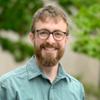
Structural geology
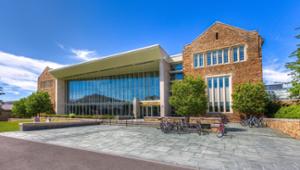

Careers After Hamilton
Hamilton graduates who concentrated in geosciences are pursuing careers in a variety of fields, including:
- Professional Geologist, Geosyntec Consultants
- Geohazards Program Manager, Colorado Department of Transportation
- Science Curriculum Development for Visiting K-12 Field Trips, Moab Museum, Utah
- Water and Natural Resources Attorney, Somach, Simmons, and Dunn
- Post-doctoral Researcher, USGS Hawaii Volcano Observatory
- Field Instructor, Voyageur Outward Bound School
- Rockies Geologic Operations Manager, Occidental Petroleum
- Agricultural Science Teacher, Madison Central Schools
- Mineral Commodity Specialist, U.S. Geological Survey
- Uniformed Services University of the Health Sciences, pursuing an Md.
- Principal Resource Geologist, Newmont Australia
- Professor of Marine Geology, University of North Carolina at Chapel Hill
- Senior Associate for Acquisitions, Prime Group, San Francisco
- Captain, U.S. Marine Corps
Explore Hamilton Stories
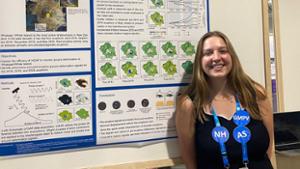
Essenmacher ’25 Publishes Research in the AGU Journal Earth & Space Science
Geosciences major Stella Essenmacher ’25 has published research that she conducted with former Visiting Assistant Professor of Geosciences Shreya Kanakiya last year.
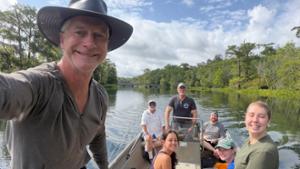
Hamilton Students Dive Into 20,000 Years of Florida River History
On Florida’s Wakulla and St. Marks rivers, a group of Hamilton researchers spent their summer snorkeling for freshwater snails, watching for alligators and manatees, and collecting samples that preserve thousands of years of environmental history.
Contact
Department Name
Geosciences Department
Contact Name
Cat Beck, Chair
Clinton, NY 13323
