
Japanese
The goal of the East Asian Languages and Literatures Department is to introduce students to the region’s changing identity while emphasizing the attainment of language proficiency as well as knowledge of East Asian culture, literature, film, and linguistics.
About the Major
The growth of the Pacific Rim as an economic and technological giant has spurred interest in the region’s cultures as well as its languages. Japanese has become one of the most widely taught languages in the U.S. and has assumed critical importance in a range of professions, from politics and diplomacy to business, education, and technology. The study of Japanese at Hamilton provides rigorous, intensive training in reading, writing, and speaking the language, with upper-level courses conducted entirely in Japanese. In addition, many students choose to study abroad.
A Sampling of Courses

Introduction to Japanese Film
This seminar delves into the history of Japanese cinema, exploring its development and impact on a global scale from the early 1900s to the present day. A unique aspect of the cinematic experience is also highlighted, specifically the presence of benshi live oral narrators. The course covers a wide range of Japanese films, from the silent era to contemporary anime. By studying Japanese cinema, students will gain a fresh perspective on the art form as well as insights into its cultural evolution as a modern mode of entertainment.
Explore these select courses:
This course focuses on Japanese as a central point of comparison with Chinese and Korean. It covers the writing system, language policies, syntax (word order, inflections, particles, and their interactions), and phonological structures (phonemes, pitch vs. tone, and sound patterns) of these languages. No prior knowledge of any Asian language is required.
Meet Our Faculty

Syntax, semantics, language acquisition, pragmatic and Japanese linguistics

modern Japanese literature, especially modernism and youth magazine culture; early 20th-century media, especially cinema and radio; and censorship and the Occupation Era, 1945-52

Education and Asian Sociology

Language Teaching, TESOL, TLOTE

Japanese language education, cross-cultural communication ,cross-cultural cyberpsychology and digital media
Faces & Spaces
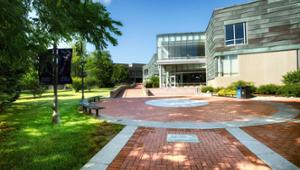
The Kirner-Johnson Building, also known as KJ, houses the offices for faculty members in the East Asian languages and literatures department. The building features an atrium, team rooms for working on group projects, and five case-method classrooms with the latest technology to support teaching and learning.


Careers After Hamilton
Hamilton graduates who concentrated in Japanese are pursuing careers in a variety of fields, including:
- Patent Examiner, U.S. Patent and Trademark Office
- Youth Coordinator, Mattahunt Wheelock Community Center
- Business Development Associate, Coleman Research Group
- Java Developer, Clarity
- Social Media Coordinator, Keep It Real Acting
Explore Hamilton Stories

Hamilton’s Class of 2026 has been celebrated, and now its grads are setting off to explore what’s next. They’re launching careers, starting grad school, and pursuing internships to further explore interests they discovered on the Hill. We asked a few recent graduates to tell us about who influenced them, memorable moments, and proudest accomplishments.

Class of ’25 Takes Next Steps — to Grad and Professional School
Last year at about this time, members of the Class of 2025 were starting to receive news about acceptances to post-graduate and professional degree programs. We caught up with a few of these recent graduates to find out what they’ve learned, what they’ve enjoyed, and any challenges they faced as they pursue graduate degrees.
Contact
Department Name
Japanese Program
Contact Name
Masaaki Kamiya, Program Coordinator
Clinton, NY 13323
