
Theatre
The goal of the Theatre Department is to teach students to think and express themselves creatively while at the same time learning discipline, time management, and solid group-building and leadership skills.
About the Major
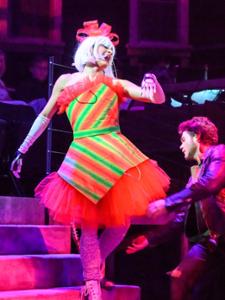
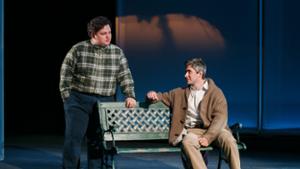
Theatre at Hamilton is a dynamic, challenging community that aims to awaken and cultivate every student’s creative potential and presence. Students learn, create, and perform in the new Kennedy Center for Theatre and the Studio Arts, and faculty help them develop their own identity through classes, workshops, projects, and productions that are innovative — and often provocative. Students may major in theatre or minor in theatre or design and production. Majors maintain high academic and artistic standards as they work on individual and collaborative projects.
Students Will Learn To:
- Exhibit competence in production/design of theatre
- Exhibit competence in acting/directing of theatrical performances
- Analyze plays/productions as aesthetic/cultural productions related to institutional and social hierarchies
A Sampling of Courses

Lighting Design
An in-depth exploration of lighting and projection design for live performance. The course will cover the process, techniques, equipment and methodologies of these theatre design disciplines. These include; composition, color theory, projection mapping, CAD drafting, as well as lighting for the camera.
Explore these select courses:
How does avant-garde theatre utilize shock as a strategy to lead us to see ourselves from new and unexpected perspectives? How are issues of colonialism and appropriation embedded in the evolution of the avant-garde? How does it simultaneously reflect and rebel against the social hierarchies from which it sprang? Through research and performance we will examine the historical, cultural and philosophical origins and influences of avant-garde theatre, as well as exemplary works from the early avant-garde movements (1890-1940) and more contemporary theatre and performance art (1950-1990), including Surrealism, Symbolism, Expressionism, Dada, Futurism, Constructivism, and Epic, as well as The Living Theatre, Grotowski, Monk, Wilson, Foreman, and The Wooster Group.
Meet Our Faculty

acting; Shakespeare; African-American theatre; Sanford Meisner; Uta Hagen; August Wilson

Technical theatre education, lighting design, stage management, production management

acting, directing, devising, playwriting, feminist theatre and performance, queer theatre and performance, performance theory, American theatre and performance, experimental theatre and performance

Asian and intercultural performance, performance studies, and directing

scenic design, costume design, period costume, architecture and décor, hand drafting and rendering, and scenic model construction

Technical direction, crew management, teaching tool craft, welding

Brass pedagogy, woodwind pedagogy, musical theatre vocal pedagogy and performance, conducting and rehearsal techniques, music directing for theatre, musical theatre production
Faces & Spaces


Careers After Hamilton
Hamilton graduates who concentrated in theatre are pursuing careers in a variety of fields, including:
- General Manager, Actors Theatre of Phoenix
- Actor, Donna on USA Network’s Suits
- Master Electrician, South Coast Repertory Theatre
- Chief of Strategy and Planning, Goldman Sachs
- Producer, NBC Universal Media LLC
- Foreign Service Officer, U.S. Department of State
- Physical Therapist, Rhode Island Rehab Institute
- Teacher/Theatre & English, NYC Board of Education
- Public Relations Director, Dallas Children’s Theater
- Features Producer, Entertainment Tonight
Explore Hamilton Stories

Del Gonzales ’25: “A Major in Collaboration”
Delbert Gonzales ’25, a theater major at Hamilton and winner of the College’s James Soper Merrill Prize this year, is committed to pursuing a career in the theatre industry. However, this path did not always seem a viable option to him.

Shakespeare's The Tempest, Reimagined
At 10 a.m., the cast and crew of The Tempest began rehearsing. They shifted between dissecting Shakespeare’s text, blocking scenes, experimenting with movement, and figuring out how to bring a century old story to life in a barn.
Contact
Department Name
Theatre Department
Contact Name
Mark Cryer, Chair
Clinton, NY 13323
