
Psychology
The goal of the Psychology Department is to provide students with the tools to pursue novel questions about behavior and the mind using the scientific method. Strong emphasis is placed on helping students learn to communicate their ideas clearly and concisely.
About the Major
At Hamilton, psychology students are introduced to a breadth of topics (e.g., clinical, cognitive, developmental, evolutionary, neuroscience, and social) while also gaining a strong foundation in research methodology and statistics. Students have opportunities to apply their knowledge, such as through research with a professor or at the New England Center for Children, a treatment facility for individuals with autism. From introductory courses through the Senior Project, students learn to use the scientific method to pursue questions about human nature.
Students Will Learn To:
- Explain how behavior and the mind are shaped by a variety of factors (e.g., biological, sociocultural)
- Evaluate sources, evidence, and psychological theories critically
- Employ appropriate research methods and statistics to address novel psychological questions ethically
- Communicate ideas clearly and concisely, demonstrating awareness of both disciplinary conventions and the target audience
A Sampling of Courses

Psychology and Neuroscience of Learning
An exploration of theoretical and methodological questions involved in the study of learning and neural plasticity. Questions covered will include: What is learning? What are the mechanisms that support neural plasticity, and how do they contribute to learning-induced changes in behavior? How does learning change across the lifespan? Laboratory exercises will include the development of original experiments to elicit and measure learning at the behavioral and neural levels, as well as the analysis of neural data. Three hours of class and three hours of laboratory.
Explore these select courses:
This course will explore the interactive relationships among evolved adaptations, development, learning, and culture, emphasizing ways in which these work together to shape individuals’ behavior. Questions covered will include: What does it mean to take an evolutionary approach to psychology? What are the major evolutionary theories, and how have they been used to explain human behavior? What are the methods and assumptions of evolutionary approaches?
In this course we will take a social psychological approach to understanding stereotypes, prejudice(s), and discrimination based on race, ethnicity, gender, sexual orientation, and other group memberships. We will examine classic and contemporary theories and research on topics such as cognitive, motivational, evolutionary, and sociocultural explanations of prejudice; modern forms of prejudice/implicit bias; the impact of prejudice and discrimination on targets of prejudice; and prejudice reduction.
An advanced seminar integrating psychological services with immersive field experience. Students complete eight to ten hours per week in a cooperating local agency or school while participating in a structured seminar examining the theoretical foundations of their applied work. The course emphasizes the provision of psychological, educational, and applied behavioral services, with focused attention on methodological rigor, ethical decision-making, and professional practice in psychotherapy, counseling, and educational psychology. Students complete an extensive written project focused on using psychological research to address real world problems at their site.
Meet Our Faculty

Attention-Deficit/Hyperactivity Disorder and associated behavior problems; transition to college; assessment; learning disabilities; parent training; stress and coping

Gender stereotypes, leadership perceptions, workplace bias, organizational behavior, cross-cultural psychology

Learning and inference; functional neuroimaging; computational neuroscience; cognitive science

Jennifer L. S. Borton
Carolyn C. and David M. ’38 Ellis Distinguished Teaching Professor of Psychology
defensive self-esteem, responses to ego threat, and negative consequences of thought suppression

Emotion, social stress, psychoneuroimmunology, psychophysiology, and neurogenetics

cognitive neuroscience of perception and attention; experimental psychology; cognitive psychology; human neuropsychology


Siobhan Robinson
Associate Professor of Psychology and Neuroscience, Director of Neuroscience
Neurobiology of learning, memory and motivation

Cognitive and socioemotional development; self-control; play and imagination; psychological distancing

Keelah Williams
Associate Professor of Psychology; Director Jurisprudence, Law and Justice Studies
Law, stereotyping and prejudice, and evolutionary psychology

Cognition, attention, memory and language processing


Intellectual and developmental disabilities, assessment and treatment of challenging behavior, organizational change management


Careers After Hamilton
Hamilton graduates who concentrated in psychology are pursuing careers in a variety of fields, including:
- Senior Financial Analyst, IBM
- Clinical Social Worker, Washington, D.C. Department of Mental Health
- Product Quality Analyst, Google
- School Psychologist, Dundee Central School
- Neuroscientist, Massachusetts General Hospital
- Chief Architect, Port Authority of NY & NJ
- Vice President of Global Marketing Solutions, Facebook
- Professor, Georgetown University Law Center
- Assistant Surgeon General, U.S. Public Health Service
- Program Director, National Science Foundation
- Senior Deputy General Counsel, San Francisco Unified School District
Explore Hamilton Stories
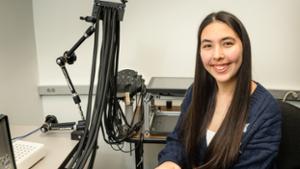
Durben’s ’25 Autistic Camouflaging Research Culminates in Publication
Recent graduate Deanna Durben ’25 engaged in research across the domains of sociology and psychology during her time at Hamilton. In 2024, her efforts culminated with a publication in Sage journals titled “Understanding autistic camouflaging: The use of online community discussions and stigmatized identity research.”

Faig Publishes Loneliness Research
Assistant Professor of Psychology Kelly Faig recently published articles on loneliness in the journals Current Issues in Behavioral Sciences, Psychophysiology, and PLOS One.
Contact
Department Name
Psychology Department
Contact Name
Tara McKee, Chair
Clinton, NY 13323
