Essays That Worked
Illustrations by Bharati Mahajan
Kyiv, Ukraine
A message appeared in front of my eyes as I woke up. “Well, they’ve never done that before,” I think to myself and proceed to press “continue” by blinking. A kaleidoscope of files pops up: I can see blurry icons, oddly named folders, half-finished projects, and loads of corrupted files. “I appreciate the developers’ effort, but this UI? Pure user-hostility,” I laugh. Still, the more I stare at those files, the more I feel like gears are starting to turn in my head, as I am getting carried away to the past ...
tima@home:~$ memories loaded successfully
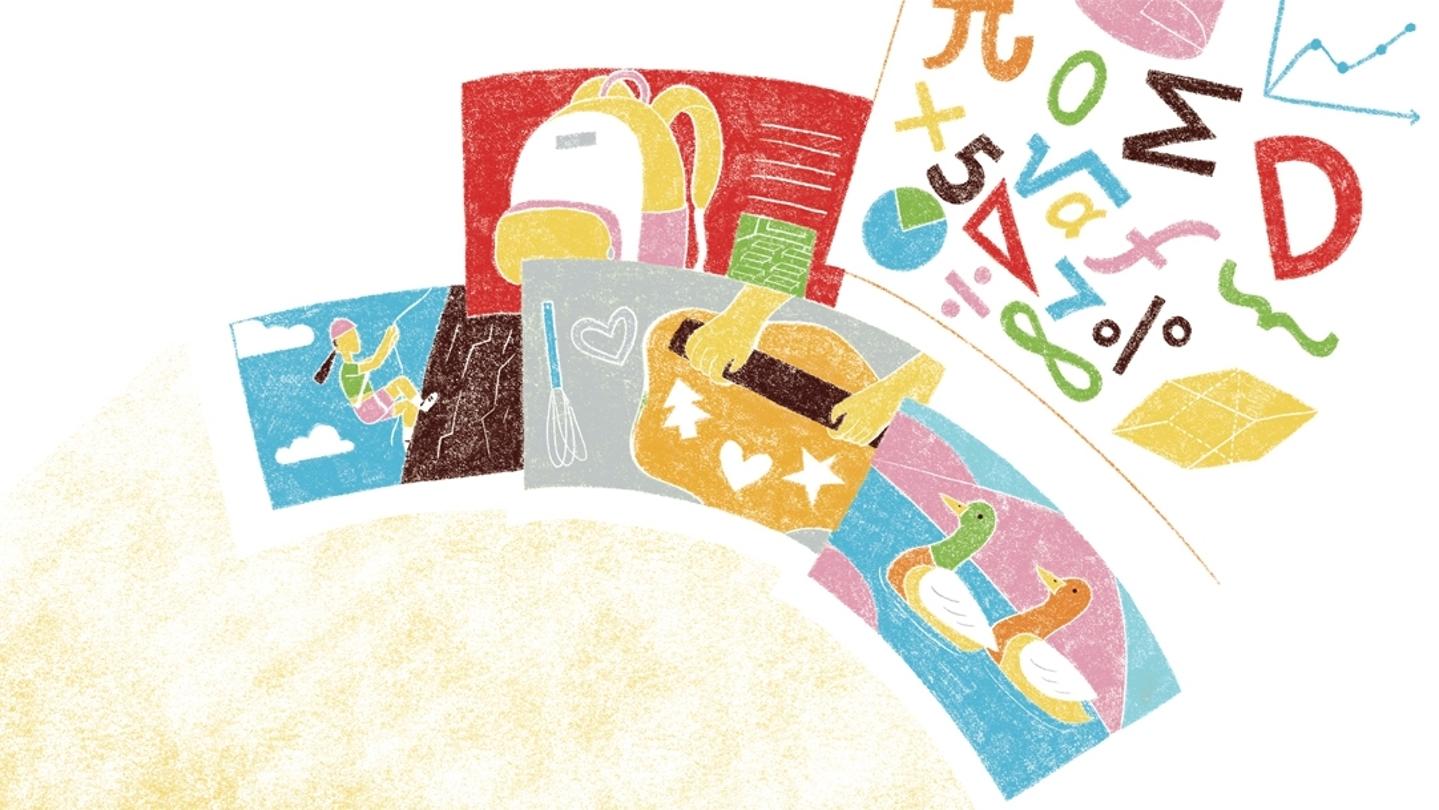
*backpack.jpg*: Kyiv, Ukraine. I’m 14. Yesterday, I left my backpack at school, which I only realized when my teacher posted a photo of it in our chat and asked to whom it belonged. Today, Feb. 24, 2022, my life was upended when my city was bombed. I never managed to retrieve my backpack.
*kombinatoryka.pdf*: I’m in Poland with my mom now, escaping the dangers of war. Discovering a math club at Szczecin Lyceum XIII proved to be a lifeline. I met incredible people and made new friends. My teacher, Ms. Beata Bogdanska, gifted me one of the advanced math books written by herself, and that present became invaluable! I still return to it during my high school.
*math_club_pset_6.pdf*: Missouri, U.S. Sitting in front of my laptop in the dorm at my boarding school, I open Photoshop and see two neatly done pages of puzzles that I am going to present at tomorrow’s math club meeting. Some types of puzzles can generally be done by mere guessing, intuition, and by using established strategies, but others can unfold their complexity through unique constructions made by the puzzle designers. While I’ve been a part of numerous math communities before, it’s the first time that I’m responsible for running the meetings, yet it doesn’t feel too overwhelming thanks to the members of the club, many of whom are enthusiastic to learn about topics not typically associated with high school math — think origami, topology games, encryption.
*yulias_dream.zip*: This zip folder contains so much content about the color groups, the research topic of my group in MIT PRIMES Yulia’s Dream. Being part of that program proved to be really meaningful to me as the experience with more advanced concepts opened my eyes to the fact that math has an infinite number of dimensions!
*voronogo_quarry_guidebook.jpg*: There’s a different kind of problem solving on a cliff face. Since 2017, climbing has taught me how to trust my balance through uncertainty. Expeditions to the Chalaadi glacier in Sakartvelo and climbing guidebooks I helped create in Ukraine became a notable part of my archive. A canceled expedition to Nepal in 2022 is still an empty folder, but the joy of climbing remains.
*unbothered_ducks.jpg*: There is a particular kind of peace in watching ducks on a quiet pond, undisturbed by the world around them. Not sure why, but what you see in real life often gets lost in photos, so currently I’m trying to make this image look more realistic with the help of filters. But in many other settings, I find myself needing to get rid of misleading filters that instead of enhancing simply distort.
*cooookies.jpg*: I can smell the ginger, even through the photo! From my early years, every winter, my brother, parents, and I all gather to bake ginger cookies, a tradition that has never been skipped, even during the war. I love this tradition because the cookies we bake might be the best-tasting cookies in the entire world! Even though not all of us can gather together every time, the spirit of celebration lets us enjoy the moment to its highest!
tima@home:~$ file extraction has failed
Some files are harder to open than others. These scattered files, pulled from the phone and laptop I used back in 2025, are stories of how I grew up. They trace the struggles, people, and passions that shaped me, revealing how I became who I am today. There were moments when it felt like the world I knew had faded into something unrecognizable. Living away from my family since I was 14 was never easy, but the people I met helped me rebuild a sense of home, piece by piece.
Today, on my 68th birthday, I have a lecture to give. I will tell my students in academia: some memories might be blurry, unfinished, or mislabeled, but together, they form the archive of who we are. And sometimes, it is the files we couldn’t easily open that may hold the first traces of who we were becoming.
Maplewood, N.J.
Our proposal, the only girl-led agenda topic, was the most controversial. We had the audacity to suggest a change to the Promise, a pledge recited at the beginning of every meeting, sacred in the Girl Scouting world. Our simple proposal, opening the Promise with “I will” rather than “I will try,” caused an uproar.
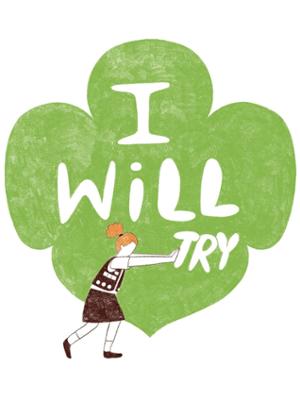 Our journey began at a meeting when I was in fourth grade and our leaders had us compare the Girl Scout Promise to the Boy Scout Law. We quickly identified that the Boy Scout Law clearly states who boys are and what they will do. The Girl Scout Promise says what girls will “try” to do. Words matter. We immediately modified the Promise for our meetings. Removing “try” instilled confidence in us so we told our leaders we wanted Girl Scouts everywhere to feel empowered in the same way. The #IWILL movement was born.
We started by writing letters to GSUSA, meeting with our service unit leadership, and posting a video on YouTube. We partnered with a psychologist with expertise in female leadership. I quickly learned what it meant to be part of a grassroots campaign and the effort and grit needed to advocate for a cause. Although in New Jersey we received unanimously positive support, as our campaign went national we encountered pushback that surprised me. Some Girl Scouts didn’t like the idea of #IWILL and even made websites dedicated to tearing us down. They believed our campaign subjected girls to undue pressure to achieve perfection. Eventually, we met with a Girl Scout official who said she loved what we were doing, but cautioned that not all girls see themselves as equals to boys. My head spun.
We did not let that stop us. In Girl Scouts, a change of this magnitude can only happen by a live vote at the national convention. After years of outreach, coalition building, countless presentations, and a meeting with the president of the GSUSA Board of Directors, #IWILL secured one of four spots on the 2023 agenda. In the lead-up, I educated attendees on our proposal and why we believed in it. I spent a week in Florida handing out #IWILL rubber bracelets and talking, listening, and debating with Girl Scouts, leaders, and elders.
I sat in the back of the room during the vote, my eyes burning into the screen where the outcome would be projected. I could hear each of the delegates registering their vote with a clicker. After a few agonizing moments, the results flashed onto the screen. We lost. I fell back into my seat and turned to my troop mates, disappointment clear across our faces. Years of hard work were wiped away in minutes.
#IWILL taught me that change is hard won. While we weren’t successful on the national level, we were able to spread our message to other troops who wanted to make similar changes. The patience and passion for advocacy I developed are priceless. Now I focus my energy toward actions where I can see more immediate and tangible results. I aim to speak clearly so there is strength behind my words. I work hard in male-dominated math and science classes to prove to my teachers and peers that I can and will excel. I co-founded SOMA BuildHers with a local female carpenter to help girls build confidence through construction. I co-founded the Women In STEM club to create a space for girls to connect and embrace their love of science. When I see an opportunity to make an impact, #IWILL.
Brooklyn, N.Y.
The formality and structure of what I will call my Council always seemed ideal to me; the way things should be, or just an excuse to act like free time in gym class was below me when, really, I had nobody to play with. The vividness of my Council came to life when I stopped playing with toys and was instead forced into swimming lessons and SHSAT practice by my too-loving parents. The leftover imagination from an interrupted childhood seeped inward and transformed into a coping mechanism for isolation that felt extreme, even for COVID.
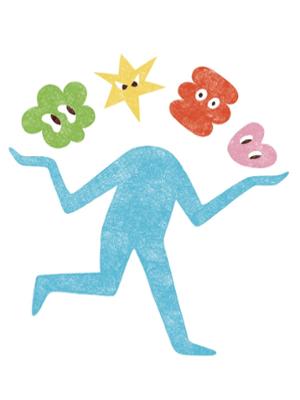 It started small: grinding wins in Fortnite was easier if I dedicated weekends to it. As I grew older and replaced video games with homework and crushes, more Council members appeared for the sole purpose of making a plan of action for each responsibility or worry I had. My Specialist of Relations signed an order banning me from making a move on a girl I liked, dissipating the worrying of whether she felt the same. Naturally, my Council helped with anything requiring clear thinking too. Time management became second nature, which proved beneficial in school where everything was “advanced” or “gifted.” What started as a product of boredom snowballed into my lifestyle, shaping how I approached challenges and interacted with others.
Having a real impact on others was foreign to me, but through volunteering as an SAT tutor, I saw how consistent planning helped my tutees turn struggle into progress and its value to them. At the end of every program, I would dedicate 20 minutes to talk about the college process and address their concerns while assuring them that their goals truly were within reach. I was imparting on my tutees the same lessons that my Council taught me. I was doing good for the world instead of just for myself.
But there were some places my Council didn’t belong. This became painfully clear when I decided to do nothing but toss a pack of tissues at a friend crying next to me during class instead of being a shoulder to cry on. I didn’t know what else to do. By that point, I had a few friends but no way to show them that I cared, that I wanted to help; compassion had no place in the Council. My Council had become all-encompassing, attempting to control me and do to others what I would never want to.
Letting these self-proclaimed experts control my life only took me so far. While structure helped me excel, it could also do unnecessary harm. Relying so heavily on my Council only worsened the very issue it was created to address: my struggle to live a life I could feel content with. After realizing this, I knew change was necessary. Life is more than a to-do list; I control my life and need to let myself enjoy it.
A fourth figure enters the conference room: me. The room goes silent. I declare that I want to sleep in until 2 p.m. and hang out with my dog tomorrow. Immediately, I’m met with a barrage of “Yes, sir” and “Of course” as the three exit the room and wait to be called on if needed. While my Council may support me through life, each decision is ultimately mine to make.
Essay written by Benjamin Frenkel from Brooklyn, N.Y.
Explore More Essays
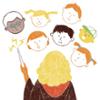
I’m no Hermione Granger — anyone with half-decent vision from Wizards and Wands camp can see that from a mile away. As I glance down at the campers’ hungry gazes, yearning to prove me wrong, I’m reminded that I have to convince these children that what I’m wearing is not just a costume. Juliet, an experienced camper at 9 years old, gives me a cynical look. Wig? Check. Uniform? Check. Mary Janes? Check. I even have Hermione’s brown eyes and thin lips. My accent isn’t half bad either.
Niko, a 6-year-old camper, interrupts the tense silence: “There’s no way you’re Hermione. You have brown skin, silly!” Well, that came out of left field. I freeze. At that moment, I realize that I stand out like a sore thumb at camp. I’m the only member of the leadership team — and, in fact, the entire camp — with a different skin color. It’s never mattered before this moment. I thought I had perfected the costume, but you can’t hide who you are.
I stand there, scrambling for words, but nothing comes to mind. “Ummm…no! That’s not true. I tanned a lot at the beach near my Muggle home this summer before going through the portal,” I ramble, glancing down at the campers’ faces, praying they’ll believe me. Skepticism reigns. Of course, she would never tan — Hermione lives in London, for God’s sake. “A-actually, you speak of this Shiwani, right? I believe she and I are distant cousins. That’s why I can get so tan, you see.” Then, weakly, I add, “Plus, I do Irish step dancing?”
Before the campers can voice anything else, Juliet jumps in, saying, “Wait, you’re right! Guys, Shiwani is at the vault working on making camper wands, remember?” She tries to wink at me but ends up blinking instead. The other campers, including Niko, nod their heads in acknowledgment. I did it — all thanks to Juliet, my now favorite camper. I am Hermione! I fit the role! I can fit in!
That moment taught me that I can “fit in” wherever I find myself. My family moved frequently during my childhood, from Nepal to Canada and throughout the United States. I faced the challenge of making new friends and adjusting to different customs in places I’d never imagined. For one, I never envisioned finding a sense of belonging at Phillips Exeter Academy. Yet here I am — doing water balloon challenges every Easter with my lacrosse teammates, inviting friends to join in my talk show, The Tea Talk, and serving as a proctor in the best dorm on campus and my second home, Dunbar. These roles taught me that fitting in isn’t about being identical to those around me, but about contributing in my own way to my communities.
I’ve found community even outside of Exeter. I’m volunteering at a local food pantry staffed primarily by people in their 60s and 70s — where I’m the youngest person by at least 40 years. I’ve made great friends there. I even go to their dinner parties! I love their ’70s music, and the dinners — mostly desserts — are legendary. Key lime pie is a fan favorite. And don’t get started on their charcuterie boards. They take them quite seriously.
What I’ve learned is that, yes, I can “fit in” anywhere, but I’m bound to be different somehow. We’re all different. I can make friends of all ages, but I know that I’m still just a kid born in a pretty cool country of momos and chai, now living in Portsmouth, N.H. Yes, I feel like an impostor sometimes — whether on a field, at family dinners, in a dorm, or under a wizard hat. But I’ve learned belonging isn’t about fitting in perfectly. It’s about finding “your people.” All it takes is an open mind, a friendly face, and a willingness to listen and share (plus a bit of creativity if you’re dealing with 6-year-olds).
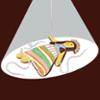
I used to be a doll. When I got out of bed, my mom would rush to dress me in the frilliest dresses. In public, I’d sit for hours. Sweet, polite, and well trained. My dad drove us to fancy houses, filled with two distinct languages. I remember bright lights shining on bistec and mofongo at dinner tables. Then, the dollhouse began to rot.
My mother became an “evil marionette,” trapping me in a world of rusty laundry machines, bug-infested rooms, and broken air conditioners. My dad became my sock-puppet hero, using the power of ice cream shops to protect me. But that escapism didn’t last. So, my last resort was to craft a humble, non-confrontational mask to separate a perfect, mature, and obedient woman from an imaginative girl named Nina. As time passed, that porcelain mask cracked, the crevices revealing a black swirling knot of insecurity.
I’m a teen with divorced parents. That story’s been heard hundreds of times. Yes, I’m independent, struggle financially, and my family is strained. None of this is groundbreakingly tragic or new. But somewhere along the way, I forgot something important: my parents are human. Not storybook characters following stereotypes or fitting into a black-and-white world. My mom isn’t a villain, nor is my dad a perfect hero. They are constantly changing. By extension, I was never a damsel in distress.
So I shattered the mask and cut the first string. After years of tension, I spoke with my mother, voicing the frustrations I’d buried. In return, she shared the burdens she’d been carrying. I opened up to my father and saw him clearly: imperfect, struggling, human. Those conversations didn’t fix everything, but they changed how I understood my world.
I cut the second string. I rediscovered parts of myself I’d hidden. I nurtured the girl who sang Paramore in her backyard, who sketched characters from the Persona series. These moments weren’t distractions; they were reminders I could still dream. And from those dreams, purpose and understanding emerged. Instead of using immersion as a sign of weakness, I molded it and forged it into a strength. Analyzing characters from my favorite graphic novels and TV shows nourished my media literacy. My obsession with fictional worlds and cultures shifted to reality, where I grasped every memoir, document, and movie I could to learn more about Julia de Burgos, Shidzue Kat?, or Daisy Bates. About women who were real, who left a lasting impact. Poems, documents, and writings made them immortal.
History and the thousands of new stories I could explore, dissect, and immerse myself in became my new obsession. I found bits and pieces from thousands of unique stories that resonated and motivated me to aim for change.
I started small, volunteering at a local law office. I translated for immigrants crossing from Juarez to El Paso as I sorted files. I saw families like mine, navigating divorce and hardship. I saw kids my age accused of crimes as I scanned files, their story bleeding through the words. I didn’t like seeing those words leaving such a permanent mark.
After that, I began helping at a local food pantry. I handed out bags to single mothers, grandparents, and college students. Often times they’d share their struggles, finding comfort in someone like me. But I wanted to address the roots, not just the symptoms. Just like those historical women, I want to help others who feel silenced, overlooked, or misjudged. I want to advocate for those failed by systems and circumstance, to be someone who sees people for who they truly are, flaws and all. My story may not be unique, but my empathy is. I’ve lived what many others have, and because of that, I want to be a source of light in someone else’s dark.
I cut the final string. I tore away the curtain that hid reality and confronted it. I accepted myself for who I am: an awkward but smart, driven girl. And I’ll continue to discover parts of myself as I experience new chapters of my life. To do that, I’ll study people, cultures, and systems. Not just to understand them, but to change them and learn from them. I’ll intertwine my passions with curiosity and forge a path unique to me, outside that dollhouse.
I haven’t found the cure for cancer, built thousands of shelters, or saved a country from ruins. But I have connected communities, built meaningful connections, and found security in myself. If I can make one person’s life happier, brighter, or better, then I can live satisfied, even if it’s been done before.
Cutting the strings that once controlled her, the Puerto Rican muñequita named Nina, with paper and pencil in hand, will pave her way to a new reality — one that is true, honest, and hers.
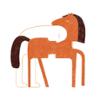
Charles paced side to side, agitated under my saddle. He felt the tight girth and flailed his head around, clearly disturbed. I temporarily calmed him down with scratches under his braids. Once he lowered his head calmly, we walked into the ring. Almost immediately, his demeanor shifted. His head raised high and his ears perked, pointing toward the kids playing in the stands. I drew on the reins to turn him, facing our first fence. I felt confident, leaning forward into what I thought would be a smooth jump, but he didn’t. Whether it was the pulsing LED lights or the poker-faced judge, he stopped, launching me forward over the fence and into the cold, sandy arena floor.
Before the horse show, I trained infrequently because Charlie always made it extremely difficult. He would gallop away from the entrance gate, making me walk far to get him. He’d poop in his water bucket, making it a pain to clean up all the stains with soap and a power washer. In return, I didn’t give him treats or groom him properly. I was trying to get home as quickly as possible. This cycle of pettiness continued up until our fateful horse show. Sitting on the cold sand, I froze. My ears tuned out the buzz of the LED lights as I fell into what felt like quicksand, trying to grasp what little control I had on my body. I stumbled to my feet, only to collapse again to my hands and knees.
At first I was mad. I thought Charlie should have walked over to see if I was okay, and I finally started walking out of anger, only to stop myself. I looked at him, his legs stiff, his eyes darting around trying to decipher which person in the stands was more dangerous than the others, his ears perked up like they were when we entered. I watched him, trying to pin the label of “prick” I thought he deserved, but my mind drew blanks. Our similarity in the moment was evident, and it made me realize he didn’t just need me; we needed each other. I didn’t see a problematic animal anymore; I saw another creature overwhelmed by the moment, and realized my anger was just my own fear, misdirected.
Days later, at the end of the first practice back home, I gave him a peppermint — a small gesture, but a start that didn’t go unnoticed. After another lesson, as I stayed late grooming him with a stiff brush making sure all the sweat was gone, he leaned into the brush’s scratch, fully relaxed.
The interaction in the ring not only helped my relationship with Charlie. At home, I stopped trying to “win” arguments with my little sister; instead, I noticed how her eyebrows would raise when she was overwhelmed, and I gave her offerings to help with homework or to listen to how at recess she was being called a “stinky-head.” I gave her the same consistent support that Charlie needed before that fateful horse show. The next time my brother complained about his coding project, I put my phone down. The frustration in his eyes reminded me of Charlie. I asked about the specific function he was stuck on and listened as he talked it out for 10 minutes, lying back in his chair.
At the barn, on a warm summer’s evening, I knew my bond with Charlie had become evident. Our coach was putting out hay for the horses at the back of the pasture. The rest of the horses walked to get their food as I approached the gate. Charlie noticed me, ignored the food, and turned without hesitation to meet me at the entrance. That was trust.
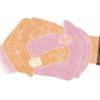
The chill of the linoleum floor cooled my knees through the thin fabric of my scrubs. My forearms balanced, hands clasped, on the gurney railing. I looked into Ilsa’s small eyes, curtained by thick folds of aged skin. My voice seemed foreign, even to myself, as I began to pray.
“Dear god, please look over your child, Ilsa, during this trying time” I riffed. “Grant her the steadiness of heart to find strength in you. May your everlasting love shine upon her forevermore. In your name we pray, amen.”
“Amen,” Ilsa echoed. “Thank you for everything, darling.”
“Of course, ma’am,” I replied.
Contrary to this anecdote, I am not a Christian. Never have been, do not plan to be. My relationship with religion stays undefined as far as I’m concerned. Its haziness is part of my identity.
However, working in a hospital only 15 minutes from Liberty University — a school infamous for its religious fervor — has sent an onslaught of heavily devout and god-fearing individuals my way. Ilsa was no exception. I peeked my head into Bay 39 and surveyed the woman inside. She was thin, her white hair in a short frizzy perm, and her face scrawled with wrinkles and creases.
“Hello ma’am, can I get you anything?” I said, a slight Southern twang slipping into the undertones. Just like I’m not a Christian, I’m not Southern. I grew up in New Jersey.
“Oh, I don’t know…” she considered. The way she sat up slightly told me she needed something, so I pressed on.
“Would you like another blanket?” I asked. She nodded.
I laid it over her, tucking it under her sides. Her face close to my ear, she whispered, “Would you stay for a bit? To keep me company?” I looked at her with understanding. This wasn’t an unusual request, especially from elders, but they felt so uncomfortable asking.
“Of course, ma’am,” I agreed, smiling genuinely. These times were some of my favorites. Not often the happiest, but always worthwhile. I led with a question, “Who is your favorite person?”
“God,” she said, her eyes shining. I was taken aback, though not entirely surprised. She pressed on. “He is the only consistency in my life. He will protect me no matter what hardships He sends.”
“Yes ma’am, he will,” I agreed. “Your love of him will grant you nothing but grace.” I then gave her room to speak, in which she detailed how God has led her to strength under her ex-husband’s abuse and the passing of her eldest daughter. I stood, giving sympathetic nods, then did what I’d learned was the best thing I can offer those like her.
“May I pray for you?” I asked.
“Oh, please,” she replied.
“What’s your name, ma’am?”
“Ilsa.”
I lowered to my knees beside her bed. Clasping my hands over hers, eyes closed, I began.
Some may call me disingenuous, but in the hardest moments of our lives, the words of others can affect so much. In that moment, Ilsa didn’t need to know who I really am. What she needed was comfort in who she was. I know who I am. I know I don’t believe in god, and I don’t need to prove it to anyone but myself. I’ve spent far too much time in my life trying to prove myself to others. But people like Ilsa have taught me that knowing myself is enough. Knowing that the funny and eccentric person I truly am can step away for a bit, and that the Southern Christian girl can come out when she’s needed. The frustrated daughter can take the backseat as the willing therapist listens to my dad rattle on about my mom. I get to be myself in the good times, but not everyone needs the same Em when things get hard.
The name of the patient has been changed in adherence to HIPAA.
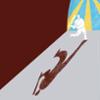
I’d started becoming a shadow of myself sophomore year when I developed symptoms of Crohn’s Disease, shedding 15 pounds from my lean frame over the next eight months. I looked like an extra in an apocalypse movie; I felt like one too. I was just a shadow. But that’s not what this story is about — not Martin Amuso the Unfortunate Fella but Martin Amuso the Comeback Kid, the Wiffle Baller.
With my diagnosis in April and treatment unapproved, Wiffle Ball became my escape. I played behind the school during lunch with a constantly rotating set of friends taking the field. Even my U.S. history teacher, Mr. Zogby, would pop by every now and then to show us his slider — he swore there would have been more motion to the pitch if he hadn’t hurt his shoulder shoveling. I brought the bat, and a friend brought the ball, and we became the co-commissioners of this spontaneous league. As the ringleaders of this lunch-time operation, we became interested in Wiffle Ball and how to really play the game. We learned about scuffing balls, so we could get the perfect pitch — from a parabolic, sluggish eephus to a blistering fastball. We gained a passion for a game that just a couple of months ago none of us had thought about playing since we were 8.
Sophomore year ended, but I wouldn’t let that mean an end to Wiffle Ball. I decided to start a summer league with my school-year-co-commissioner as my partner. We had game 1 scheduled for Tuesday, July 2, 2024, at 7 p.m. Everyone was aching to take to the field. I know I was, but that could have been just another stomach ache.
Fortunately, and coincidentally, on June 30, I had been approved for Biologic Infusion Therapy. Treatment was scheduled to begin on, wouldn’t you know it, Tuesday, July 2 at 7 a.m. I’d be heading to Wiffle Ball with a win before the first pitch was even thrown.
I remember that first infusion. I weighed 110 pounds, the smallest I’d been since my symptoms started progressing. But, as the sun rose while driving to the hospital, I felt a light coming back inside of me. No longer a shrinking shadow of a shrinking person, I was going to be made whole again. No. From that morning forward, my shadow grew with me, and I had a great benchmark that night. As the game went on and the sun set in front of the pitcher’s mound, I watched my shadow through the rising dust of the batter’s box, caught in the beams of the golden hour, I crouched in wait for the perfect pitch to swing at. I waited. The pitcher stretched, lunged toward me in quiet concentration, wound up, and finally released, his arm slashing across his chest, propelling the ball toward me. I watched the ball spin, the light falling through the holes on its top half, making its own strange shadow in that golden light; I watched it curve to my bat as I swung and made contact; I heard the dull crack a good hit makes, and I ran. I was in the zone.
I stayed in the zone for another six weeks of Wiffle Ball, two more infusions, and the beginning of a lot of rebuilding. I felt growth for the first time in a year and I loved it. The newfound appreciation for my physical growth widened to appreciation for growth in other areas of my life, especially my friends and family. Light shines into my life all over again, radiating into every shadowy corner of myself and showing me amazing things within.
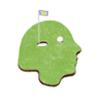
It is the final day of one of the biggest events in professional golf. Tommy Fleetwood has a two-shot lead with a chance to take home $3.6 million and his first career PGA win. As he prepares to hit his tee shot, the immense crowd surrounding him buzzes in anticipation. Tommy Fleetwood is going to win. Until he doesn’t. Three holes later he is tied for third, having lost his first-place finish because of overconfidence. In golf, you are only as good as your last score. This sport demands perfection. But unfortunately, as I have come to learn, no one is perfect.
Golf forces a player to suppress emotional reactions to both good and bad, one of countless components that makes the game so formidable. No celebration. No temper tantrums. In order to play a solid round of golf and attempt to replicate their last best score, a player must embody the mental and emotional state of a robot. But humans are not robots, and emotions are only one of the uncontrollable factors that make playing a flawless round impossible. No one can hit every shot just as intended, no one can sink every putt. Even though I’m a skilled player, I know that more often than not I will leave the golf course feeling defeated. So why do I show up again the next day? Honestly, because I just can’t stop trying for perfection.
Most good games are addictive because they offer a strategic challenge that needs to be conquered. With determination we can eventually reach our goal, cement the path to victory, and move on. But this can never happen with golf. Golf is a never-ending challenge because golf is unbeatable. No matter how good you are, something can always go wrong: a mistimed turn of the wrist, a water hazard, even a momentary second of premature joy. Any one of these details can result in a stroke left on the course.
Imagine, for example, that it’s a 90-degree day in Connecticut, a day so humid that sweat plasters your shirt to your body, and it feels hard to breathe. This is me, two months ago. Despite the weather, I am on a roll, my swing feeling the best it has in weeks. I’ve tuned out all distractions: my competitors, the towering oak trees lining the golf course, the elite college coaches watching me like hawks. It’s just me, my club, and the golf ball. Everything goes seemingly perfect; I shoot my best score ever. Yet sitting in the passenger seat enroute to my hotel, I can’t help but replay each shot. The short missed putt. The drive hit out-of-bounds. Golf is addictive because even when the game is good, even when I’ve accomplished what I intended, I can’t stop thinking about what I’ll do next time. I actually can’t seem to stop playing golf.
When I get home, I practice. I hit 54-foot putts in a row. I perfect my iron distances. I work tirelessly on aim with my driver. Then I go back to the golf course and try to break my new personal best.
People say the definition of insanity is doing the same thing over and over, expecting a different result. After his heartbreaking finish, Tommy Fleetwood said, “There’s another week that’s next, and I’ve just got to try [to] put myself in that position again.” I think that anyone truly dedicated to golf is a little bit insane. But then again, love is crazy.
Fleetwood also said, “Golf’s not an easy game. You keep working at it and sooner or later, something good will happen.” I suppose that when you really love something, it’s hard to let it go.
These essays were published in the Summer 2026 Hamilton magazine and illustrated by Bharati Mahajan. These essays follow similar collections from the Class of 2026, Class of 2022, Class of 2018, Class of 2012, and Class of 2007.

College Essay Writing Tips
The Hamilton Admission Team offers these tips for you to consider when sitting down to write your college application essays.
Contact
Office of Admission