Workshops & Events
Saturday Speaker Series
Join us for Hamilton’s Saturday Series, where expert speakers share practical tips for your garden, yard, and home. Some sessions feature demonstrations. Don’t forget to explore our beautiful, accredited campus arboretum while you’re here.
All events in this series begin at 10:00 a.m. on Saturdays and are free and open to the public.
Attend in person in the Taylor Science Center’s Kennedy Auditorium, or join online via Zoom by registering below.
2026-27 Events
September 26, 2026
The Trees of Hamilton with Mike Mahanna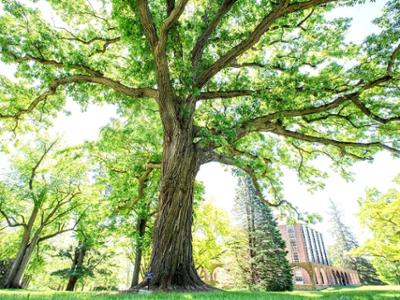
Our guest, Mike Mahanna, will give the history of Hamilton’s tree canopy from its early inception through the years and how it has evolved into today’s canopy. He will share photos from different seasons and include images from the early 20th century. He will identify current trees through the photo presentation and share a few stories from over the years.
Mike studied landscape design at Morrisville State College. After working for two commercial landscape companies, in 1989 he got the opportunity to work for Hamilton College. After a successful 20-year career at Hamilton, he left the college to own and operate his own landscape design company, the How-to Gardener. He is a member of the New York State Arborist Association, a regular volunteer at the New York State Fair Arborist booth, and holds a Master Gardener’s certificate with the Cornell Cooperative Extension of Oneida County.
October 17, 2026
It’s All In The Family with Lee Reich
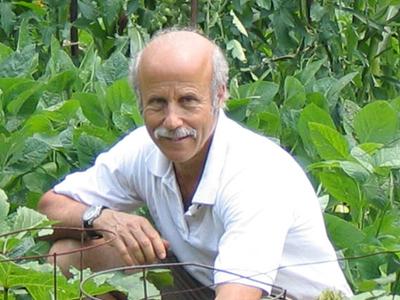
In the garden, families matter. They matter for keeping your plants healthy, for helping to identify plants, and more. This presentation details the history of how plant families came about, what those families were and are based on, and—important for anyone who cultivates a garden—why knowing something about the families is good for every gardener and farmer.
Lee Reich, PhD, dove into gardening decades ago, initially with one foot in academia, as an agricultural scientist with the USDA and Cornell University, and one foot in the field, the organic field. He eventually expanded his field to a farmden (a farm/garden hybrid) and left academia to lecture, consult, and write. He has written for Horticulture, Fine Gardening, and many other gardening magazines, and was a garden writer for the Associated Press for 29 years. He is the author of Weedless Gardening (expanded and revised for publication in April 2027), The Pruning Book, Landscaping with Fruit, and six other gardening books. Besides providing a year-round supply of fruits and vegetables, his farmden serves as a testing ground for innovative techniques in soil care, pruning, and growing, and as an educational site for workshops and training. Science and an appreciation of natural systems underpin his work.
November 2026
Varieties and Rootstocks for the Home Orchard with Mike Basedow, Cornell Cooperative Extension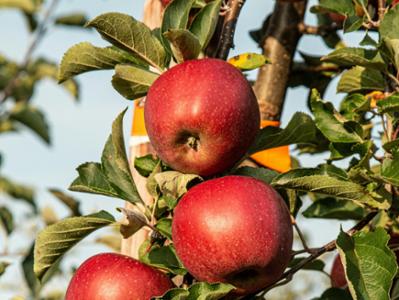
While there are countless tree fruit varieties available in nursery catalogs, some are better adapted to grow in Central New York backyards than others. In this talk, tree fruit expert Mike Basedow will discuss his variety of recommendations for backyard apples, pears, peaches, cherries, plums, and apricots, along with the rootstocks they can be grown on in our local climate. Mike is an extension associate and regional tree fruit specialist with Cornell Cooperative Extension's Eastern New York Commercial Horticulture Program, helping commercial orchards throughout the Champlain Valley, Mohawk Valley, and Capital District. He also teaches an online beginning orchard course through the Cornell Small Farms Program. Photo by Marek Studzinski on Unsplash
February 20, 2027
Tree Risk Assessment for Homeowners with Chris Luley
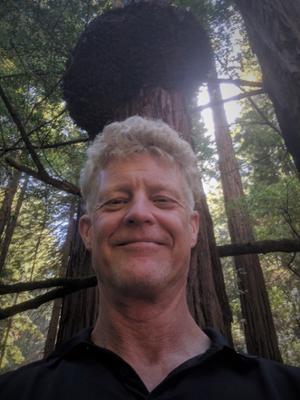
Mature, large trees are a desirable component of most urban landscapes. However, trees can pose a threat to people and property that tree owners or managers cannot ignore. Although most tree owners are not experts at assessing the potential risks posed by urban trees, they may still have a legal duty to inspect their trees or retain an arborist to do so. This presentation will cover the basics of tree risk inspection, where obvious symptoms and signs may require closer inspection, and how to access qualified tree risk inspection services from an arborist.
Christopher J. Luley, Ph.D., has a BS and an MS in Forest Pathology from SUNY ESF in Syracuse. His Ph.D. is in plant pathology from Iowa State University, where he also managed the Plant Diagnostic Clinic. He was a Forest Pathologist for the State of Missouri and has been a consultant since 1991. In 2017, he started Urban Forest Diagnostics. Dr. Luley has authored over 70 scientific, technical, and popular-press articles and has received the R. W. Harris Authors Award from the International Society of Arboriculture (ISA). He developed TreeRot.com and recently received the Brian Skinner Lifetime Achievement Award from the NYS Arborist, ISA Chapter, and the author award from the Midwest Chapter of ISA. He has published three books on urban tree care, including the popular Wood Decay Fungi of Urban Living Trees.
March 20, 2027
Jousting with Japanese Knotweed with Teri Chace
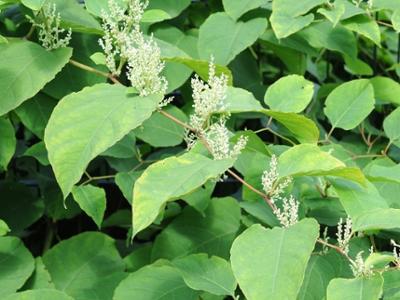
The introduced, invasive, and indomitable Japanese knotweed is becoming an increasing concern. Methods that work to rein in or eliminate other unwanted plants tend to fail with this beast. We’ll begin with some useful and perhaps surprising information about it, review what doesn’t work and why not, and then describe what does. This presentation is tailored especially to homeowners, gardeners, and property managers.
Teri Dunn Chace is a writer and editor with more than thirty-five books in publication. She has also written and edited extensively for Horticulture, North American Gardener, Backyard Living, and Birds and Blooms. Raised in California and educated at Bard College in New York, Chace has gardened in a variety of climate zones and soil types.
April 10, 2027
Philosophy Behind Ikenobo Ikebana with Darryl King
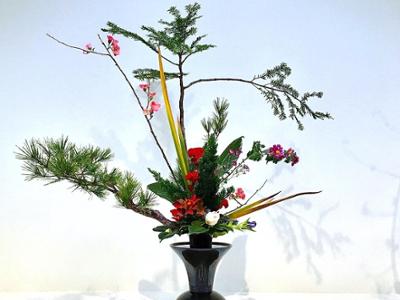
Ikenobo is the oldest and largest school of ikebana, the Japanese practice of giving plants and flowers that invigorate new life. The Buddhist practice of Ikenobo has existed since the building of the Rokkaku-do temple. The organized school institution was founded in the 15th century by the Buddhist monk Senno. The school emphasizes the "inner character" and inherent nature of plants (shussho), finding beauty not just in blooming flowers but also in buds and withered materials. Learn about this ancient art form.
Explore recordings of past events on the Hamilton College Arboretum YouTube playlist or browse the list of previous events.
Contact
Arboretum
