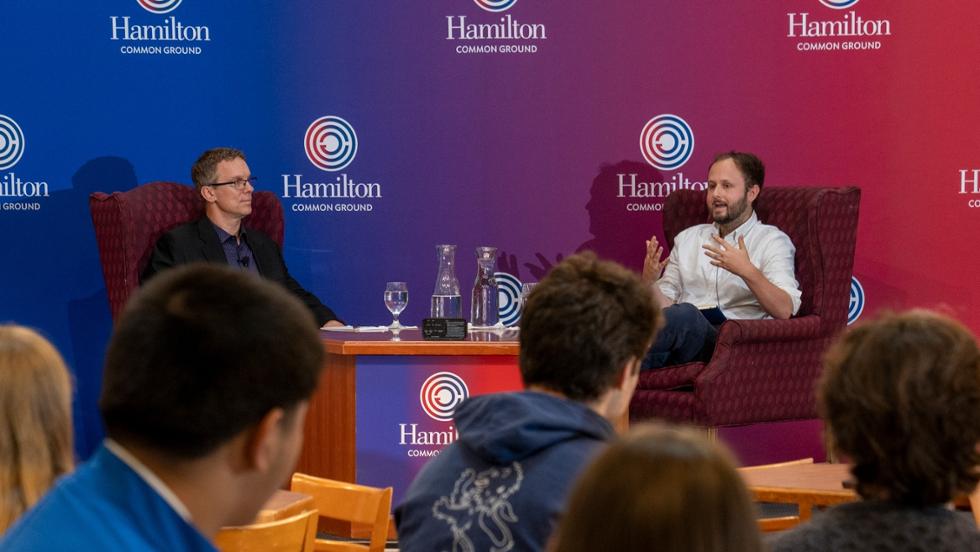
“This was the most expensive midterm in American history. One estimate of the amount spent on these elections was $12 billion, up from $9 billion just four years ago,” Foy-Sutherland said. “Outside group spending broke toward Republicans decisively … but Democrat-candidate spending really swamped Republicans. They outspent Republicans by a margin of about $800 million dollars.”
“This was the most expensive midterm in American history. One estimate ... was $12 billion, up from $9 billion just four years ago.”
Perry, whose research focuses on issues and geography, said the scale of the Democrats’ victory is rare in modern elections, as one would need to look back to the 1990s for comparison.
“Democrats were able to win senate seats and gubernatorial seats where it hasn’t happened in decades,” Perry said. “... When we think of what transpired and try to make sense of the size and scope, that’s what I’m thinking about.”
The two political scientists also agreed that national redistricting efforts may have hurt Republicans more than helped them. An attempt to net an additional 15 additional house seats resulted in a total of four wins, and drew a lot of ire from voters.
“A total failure,” Perry said.
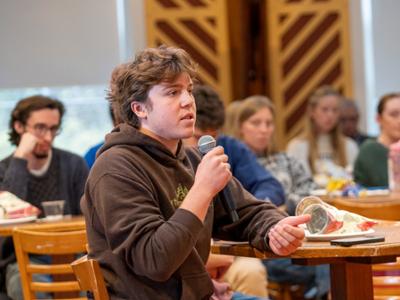
One student in attendance asked what the election results mean for more progressive candidates, particularly as some commentators have branded political groups like the Democratic Socialists of America as being too progressive and out of sync with the majority of the electorate.
“I’m curious what you think about the role of progressive messaging in these campaigns and their potential role in the future of the party,” the student asked.
Foy-Sutherland and Perry said that while the results show some movement for progressive causes, they are reluctant to say there has been a tidal shift that would support more progressive policies down the road.
“My conclusions would be more cautious,” Foy-Sutherland said. “While Abdul [El-Sayed won], he didn’t win by as much as other candidates.”
“Democrats were able to win senate seats and gubernatorial seats where it hasn’t happened in decades ... When we think of what transpired and try to make sense of the size and scope, that’s what I’m thinking about.”
Perry said progressive messaging works particularly well during midterms with unpopular incumbents, but it usually doesn’t work out that way in the general election.
“I think that’ll be a little difficult to replicate in a general election with larger turnout,” Perry said. “I do think over time progressives have become a more impactful part of the Democratic Party, but they are still on the margins even though their numbers are growing in the house.”
The Nov. 6 event was hosted by Hamilton’s Common Ground in collaboration with the Levitt Center, HamVotes, and the Government Department. Common Ground has fostered civil discourse at Hamilton College through the support of events, debates, and activities that encourage students to be active citizens for democracy.
Posted November 10, 2026