Winter Preparedness
-
Sign up for Campus Emergency Alerts.
Subscribe to Everbridge to be prepared in the event of emergencies on campus.
-
Download your own Winter Dorm Survival Kit
Prepare for Upstate NY winter in your dorm!Download the OC CARES app.
Download the OC CARES app to be connected to the resources & alerts within Oneida County! -
Prepare for the Weather!
Visit weather.gov for up-to-date forecasts and radar to prepare for the weather.
Prepare for your return from November break & winter in Upstate New York with these tips.
Don’t forget:
- Winter coat, gloves, hats, and scarves
- You’ll want them for the walk to class — a hoodie won’t cut it.
- Boots with good traction
- Sneakers don’t work well on icy or snowy pathways. Don’t risk falling this winter.
- Extra layers, blankets, and supplies
- Keep warm and safe indoors — Be prepared for a power outage & for if you can’t leave campus during a storm.
- If you want more information: Download your own: “Winter Dorm Survival Kit”
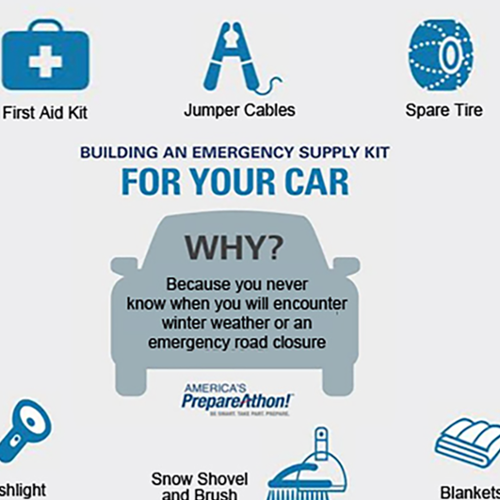
- Emergency supply kit for your car
- See graphic below for what to include. Be prepared ahead of time.
You can expect averages of 10°- 20° during the day, with nights dropping as low as 0°or lower! Bring gear that keeps you safe, warm, and ready for the season.
If you MUST drive during a storm:
Winter Storm Driving Guidelines
- Even the roads that just look wet could still be slick & icy!
- More than 5,000 fatalities occur on the roadways each year due to weather conditions.
- Black ice is common in shaded or high trafficked areas.
- Windows, mirrors, lights, hood, and roof.
- Flying snow from cars causes accidents, & it's the LAW!
- Tell a friend where you are going & what route you plan to take.
- If something happens, this person will know where to check.
- A fully charged mobile phone, car charger, a snack & water.
- Emergency supplies kit in your car - See the graphic above for what items to include in your kit!
- Remain calm
- Ease your foot off the gas and turn your wheels in the direction you want the front of the car to go.
- If you have an anti-lock braking system (ABS), apply steady pressure to the brake pedal.
- Never pump the brakes on an ABS equipped vehicle.
- Pull over to the side of the road and stop your car until visibility improves.
- Turn off your headlights and use your parking break or flashers when stopped so that another car won't mistakenly follow your tail/brake lights and end up hitting you.
If your car gets stuck in the snow:
-
Leaving on foot is dangerous.
-
Wind-driven and heavy falling snow can easily disorient you quickly!
- Run the motor about 10 minutes each hour for heat.
- While the engine is running, crack a window slightly for fresh air.
- Clear snow from the exhaust pipe to avoid gas poisoning.
- Turn on the dome light at night when running the engine.
- Tie a bright colored cloth, preferably red, to your antenna or door handle.
- After snow stops falling, raise the hood to indicate you need help.
- Stay bundled in blankets or layers.
- Avoid draining your phone battery, for things other than calling for help.
Walking & Biking in the Snow
- Sidewalks & pathways get icy fast.
- Black ice is common in shaded or highly trafficked areas.
- Take smaller steps, give yourself extra time to get where you need to be.
- Snow, ice, and pathways that aren’t plowed make biking during winter unsafe.
- Plan to walk or utilize shuttles instead once snow arrives.
If you plan to bike, you’ll need:
- Winter tires, strong lights, and reflective gear
- To prepare your route — Biking in winter isn't always sensible, even with the best gear!
Winter Living
- Don't block radiators or vents, ensure they are clear of any items, furniture or debris.
- Never use ovens, stoves or hairdryers for heat
- They are unsafe, and will trigger alarms.
Download your Winter Dorm Survival Kit here!
- Extra blankets and warm layers in case your room gets cold.
- Shelf stable food and snacks
- Like: Soup, canned goods, granola bars, peanut butter.
- Flashlight & spare batteries
- Books, printed classwork, puzzles & games (in case the wife is out!)
- Don't rely on your phone in the event of a power outage.
- Dining halls and campus services, including shuttles, may close or be delayed during a heavy storm.
- Power and Wi-Fi can go out temporarily, so keep your devices charged.
- Having a few basics in your room means you can be safe and comfortable until things reopen.
- Prepare your dorm with a Winter Dorm Survival Kit
- Contact Facilities ASAP if you notice your room is unusually cold, leaking water, or if you see frozen pipes.
- Small issues can become bigger emergencies if not fixed right away.
