Bookshelf
Alumni and faculty members who would like to have their books considered for this listing should contact Stacey Himmelberger, editor of Hamilton magazine. This list, which dates back to 2018, is updated periodically with books appearing alphabetically on the date of entry.
-

(Ian Randle Press, 2026).
The volume chronicles the life and political journey of longtime Guyanese political and social activist Moses Bhagwan, whose decades of work in political and social justice organizing have shaped public life in Guyana. The memoir offers a firsthand account of key political developments in Guyana while reflecting on broader themes of democracy, activism, race, and social transformation. Through personal narrative and political reflection, Bhagwan documents his experiences as an organizer and public figure engaged in struggles for equality and civic participation.
Topic -
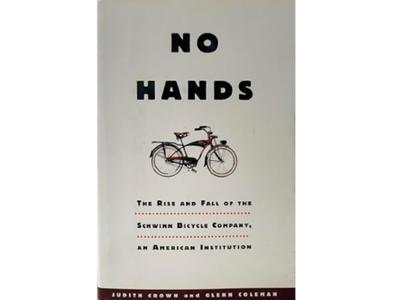
(Business Cycles Media, 2026).
The publisher notes, “The 1950s was the era of the Black Phantom, the Schwinn Bicycle Co.’s classic balloon-tire bike with chrome fenders that gleamed when you opened the garage door. These were the years when the name Schwinn was synonymous with bicycle, and the Chicago-based family company manufactured one of every four bikes sold in America. Since its establishment in 1895, Schwinn knew the pulse of its market, repeatedly reinventing its product to capture the consumer’s imagination and bring to life so many of the designs that shaped each generation’s idea of what made a real bike: high-rise handlebars, handlebar streamers, balloon tires, and banana seats.
Topic -

(National League of American Pen Women Inc., 2026).
This powerful book, the author’s 17th, deals with violence against women, which she says is too often treated differently as “domestic violence.” According to the publisher, the novel “is the story of a young woman who is brutally shot and survives in a ‘locked-in’ state, yet speaks words unrelated to her surroundings. It is the unexplained phenomena of her disconnected speech that causes people around her to either exploit her condition or use it to find significance and meaning in their own lives, interpreting the words of the grievously injured woman through the lens of their own belief systems. The novel is also a symbolic narrative about violence against women and how women have persevered.”
Topic -

(Lulu Press, 2022).
This book details the making of the award-winning documentary, North to Katahdin on the Appalachian Trail, which has aired regularly on the Vermont PBS station. The author notes, “I wrote this book to tell the whole story of my thru hike of the Appalachian Trail in 1984. Not the highlights, not part of the tale, but the full story. It’s a true story of thru hiking in the era of heavy packs. A personal drama of losing and finding love and an improbable tale of a film production on the Appalachian Trail. My first of the Triple Crown long-distance hikes.”
Topic -
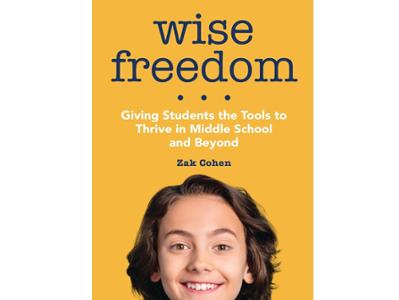
(Association for Supervision and Curriculum Development, 2026).
This book explores how schools can take the middle-school years more seriously and help young adolescents become more curious, capable, responsible, and independent. As the publisher notes, “Wise Freedom names the philosophy at the heart of great middle-school teaching: the belief that autonomy and accountability aren’t opposite ends of a spectrum but two symbiotic parts of a whole. To that end, it’s critical to embed choice within structure and pair high expectations with high support, and this book offers teachers and principals a constructive path forward.”
Topic -

(Marrowstone Press, 2026).
Subtitled “Reflections at 84,” this book of poems is described by the publisher thusly: “Suppose, old, you find yourself more in love with the world than ever, even while knowing, also better than ever, how vile and violent much of history is, how cruel time and ill fortune can be. What then? That is the question which Weltner’s After Dwelling on Earth confronts not to answer it, but to pursue it further, to deepen it so that at least the question itself makes more sense in the way poetry can sometimes do, by accepting for itself the offered ways of love and language.”
Topic -

(Little Cottage Press, 2024).
“Porcupines in prickles and towers of giraffes; Some group names of critters will give you belly laughs!” So writes the author in this children’s book that tells in cheerful rhyming verse and colorful, whimsical illustrations about the names by which some animal groups go.
Topic -

(Scribner, 2026).
From a features editor at The New York Times comes this book that’s more than your typical music biography; it’s a front-row seat to the forces that shaped an era. From Dylan’s initial dismissal description of the Beatles as being “bubblegum” for “teenyboppers,” to his realization that they were “pointing the direction where music had to go” — and from McCartney once calling Dylan’s music “folk crap” to the Fab Fours’ impromptu renditions of 15 Dylan songs during the 1969 Get Back sessions — the book captures the moments that pushed Dylan to “go electric” and inspired the Beatles to deepen their lyrics.
Topic -

(Harper Collins, 2026).
When Vogue magazine featured Madden’s bestselling novel earlier this year, the writer described it perfectly: “There is, to put it simply, no book quite like T Kira Madden’s Whidbey, a literary thriller that braids together the perspectives of three protagonists — two survivors of childhood sexual abuse and the mother of their recently deceased abuser — with skill and astonishing empathy. If it’s short on facile platitudes about what it means to live through something awful, it just might reconfigure your expectations about what it means to live at all.”
Topic -
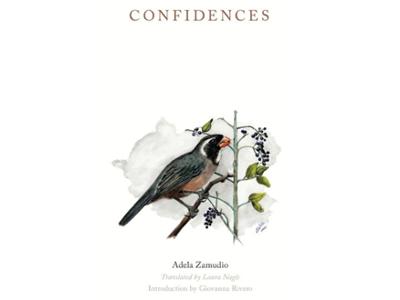
(Bucknell University Press, 2026).
This book is a translation of a 1913 work by the Bolivian poet Adela Zamudio. (1854-1928). The publisher notes, "The only novel written by acclaimed feminist poet Adela Zamudio, Confidences was harshly criticized for not following the conventions of realist literature, but it has since been hailed as a lost classic of Bolivian modernism. Now available in English for the first time, this translation captures the lyrical qualities of Zamudio’s prose as it vividly depicts how sexism, religious dogma, and prejudice prevented women from shaping their own destinies."
Topic
Contact
Stacey Himmelberger
Editor of Hamilton magazine
